
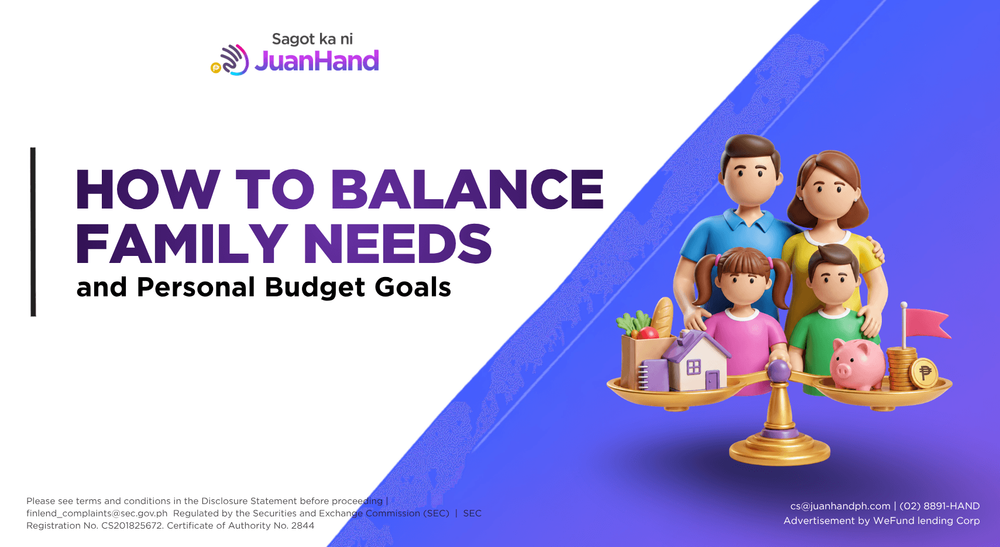
Balancing family responsibilities with personal financial goals starts with a realistic budget. By prioritizing essential expenses while setting aside money for savings and future goals, you can support your household without losing sight of your own financial progress.
For Filipino households, managing money can involve food, transportation, utilities, education, medicine, and support for parents, siblings, or other relatives. A practical budget should account for these responsibilities while leaving room for savings and personal goals when possible.
The goal is not to create a perfect financial plan. It is to build simple habits that help you make informed decisions, adjust when circumstances change, and maintain financial stability over time.
1. List Essential Family Responsibilities
Start by identifying the expenses your household needs to cover each month. These may include food, housing, utilities, transportation, education, medicine, insurance, and required payments.
Knowing your essential expenses gives you a clearer picture of how much income is already committed. It also helps you determine how much can realistically go toward savings and personal goals.
Review these expenses regularly, especially when household needs or income change. A simple list, spreadsheet, or budgeting app can help you keep track of them.
2. Define Your Personal Financial Goals
Personal goals can include building an emergency fund, saving for retirement, paying for professional training, preparing for healthcare expenses, or saving for a future purchase.
Give each goal a specific purpose and, when possible, a target amount and timeline. This makes it easier to determine how much you need to set aside regularly. Even when family expenses are a priority, keeping a small contribution toward your own goals can help you maintain long-term financial progress.
3. Separate Urgent Needs From Important Goals
Some expenses require immediate attention, while others can be planned for later. Learning to distinguish between the two can help you make better decisions when your budget is limited.
For example, food, medicine, utilities, and necessary repairs may need to take priority over non-essential purchases. At the same time, longer-term goals such as savings should remain part of your overall plan.
When an unexpected expense comes up, review your budget first instead of immediately setting aside every financial goal.
4. Create Separate Budget Categories
Divide your income into clear categories such as household essentials, family support, savings, personal goals, and flexible spending. Separating these categories makes it easier to see how much money is available for each purpose. It also helps you identify which expenses can be adjusted when your budget becomes tight.
The exact amount for each category will depend on your income, household responsibilities, and financial priorities. Choose amounts that are realistic enough to maintain consistently.
5. Discuss Priorities Openly
Family finances can become difficult when expectations are unclear. Talk openly with your partner or household members about important expenses, savings goals, and financial responsibilities.
Discuss upcoming costs such as school expenses, major purchases, or support for relatives before they affect the budget. This gives everyone a chance to understand what the household can realistically afford. Clear communication can also make it easier to agree on spending limits and financial priorities.
6. Set Limits for Extended Family Support
Helping relatives can be an important responsibility, but it should be balanced with your household's financial capacity.
Set a support amount that you can provide without putting essential expenses, savings, or debt payments at risk. If additional assistance is requested, review your current budget before committing to it. Having a clear limit does not mean you are unwilling to help. It simply ensures that your support remains sustainable.
7. Protect a Small Personal Contribution
When most of your income goes toward family expenses, personal goals can easily be postponed. If your budget allows, set aside even a small amount for your own financial priorities.
You can automate the habit by saving a portion of your income whenever you receive your salary or other regular earnings. The amount may change from month to month. What matters is keeping the habit realistic and adjusting it when necessary.
8. Plan for Children's Needs in Advance
Children's expenses can include school fees, uniforms, projects, transportation, medicine, activities, and other recurring costs. List predictable expenses ahead of time and estimate when they are likely to occur. Saving gradually for these costs can reduce the pressure of paying for them all at once. For larger annual expenses, consider dividing the expected cost across several months and including it in your regular budget.
9. Use Shared Decision Rules
Create simple household rules for large purchases, emergency spending, and financial requests from relatives. For example, you may agree to discuss major purchases before making them or review the budget before taking on a new financial obligation.
Having agreed-upon rules can make financial decisions more consistent and reduce the chance of spending based only on emotions or short-term pressure.
10. Review the Balance Every Payday
A budget should not remain fixed when your financial situation changes. Review your income, expenses, savings, and upcoming needs every payday.
Look for changes such as higher utility bills, school expenses, medical costs, or changes in income. Then adjust flexible spending and savings allocations as needed. Regular reviews help you identify financial pressure early and make changes before it affects essential expenses.
11. Avoid Guilt-Based Spending
Family members may sometimes feel pressured to provide financial help even when their budget cannot support it. Making financial decisions based on guilt can put your household's own needs at risk.
Before agreeing to additional spending, consider your available income, existing commitments, and upcoming expenses.
It is reasonable to set boundaries when providing financial assistance would affect essential household needs or long-term goals.
12. Build Long-Term Stability Together
Balancing family needs and personal goals is not only about managing the current month. It is also about gradually building financial security for the future.
Work toward goals such as emergency savings, education, healthcare, retirement, and other long-term priorities. As your income or circumstances change, update your budget accordingly.
A sustainable financial plan should support your family's current needs while also giving you room to prepare for future opportunities and unexpected expenses.
Need a Helping Hand?
Unexpected family expenses can sometimes put pressure on an already-planned budget. If savings or other available resources are not enough, eligible users may consider JuanHand for a temporary financial need after reviewing their ability to repay.
JuanHand allows eligible borrowers to apply for up to ₱50,000, with daily interest rates as low as 0.025%. Applications require a registered mobile number and 1 valid ID, while loan offers, rates, charges, and repayment terms are subject to assessment and eligibility.
JuanHand does not charge a processing fee. Before borrowing, review the total cost and repayment schedule and make sure the payments can fit comfortably within your budget.
Key Takeaways
Balancing family responsibilities with personal financial goals requires a realistic budget that prioritizes essential expenses while allowing for savings. For Filipino households, this includes managing costs such as food, transportation, utilities, education, and support for extended family. Identifying essential monthly expenses helps clarify committed income and determine allocations for personal goals like building an emergency fund or saving for retirement. Open communication about financial priorities ensures everyone understands spending limits and responsibilities.
It's vital to distinguish between urgent needs and important goals; immediate expenses like food and repairs often take priority over non-essential purchases, while long-term savings goals remain important. Creating separate budget categories provides visibility into available funds and areas for adjustment. Support for extended family should be balanced within one's financial capacity, with clear limits set for sustainability. Planning for children’s predictable expenses in advance reduces financial strain, and establishing simple rules for major purchases promotes collaboration, helping families balance collective needs with individual aspirations.
Download the JuanHand app today via the iOS App Store or Google Play Store, or visit www.juanhand.com.
Frequently Asked Questions (FAQs)
How much should go to personal goals?
No fixed amount works for every household. Consider your income, essential expenses, savings, and family responsibilities, then choose an amount that you can realistically maintain.
What if my family needs almost the entire budget?
Prioritize essential expenses first and review which flexible costs can be reduced. If possible, keep even a small amount for savings or personal goals so the habit does not disappear completely. How can I say no when relatives ask for financial help?
Set a support limit based on what your budget can afford. If additional assistance would affect food, housing, medicine, bills, or other essential expenses, explain that your current budget cannot accommodate it.
How often should the family review the budget?
Review your budget every payday and whenever there is a major change in income or expenses. This may include changes in school costs, healthcare needs, household responsibilities, or regular bills.
Can JuanHand help with an urgent family expense?
Eligible users may consider JuanHand for a temporary urgent financial need after reviewing affordability. JuanHand does not charge a processing fee, while loan amounts, rates, charges, and repayment terms depend on assessment and eligibility.