
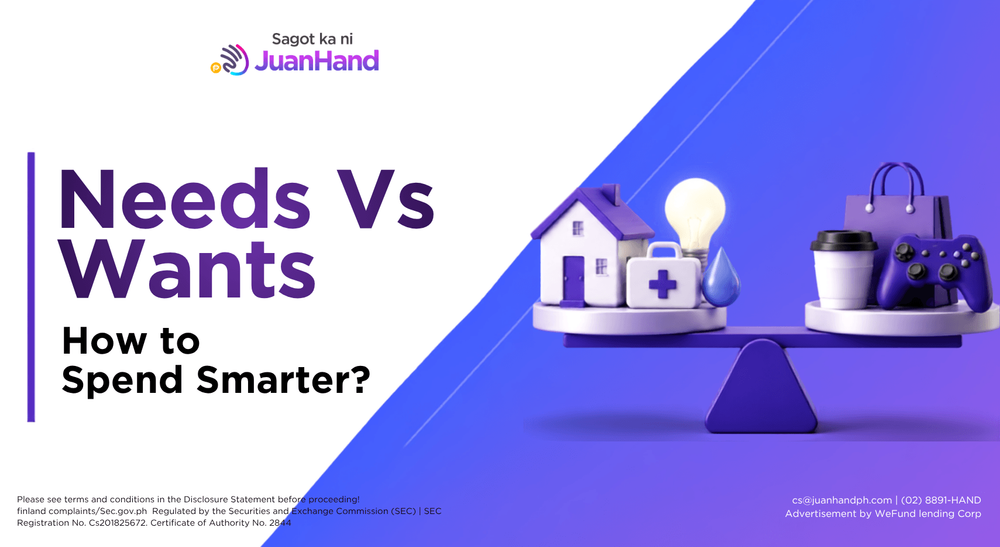
Managing money starts with knowing the difference between a need and a want. This may sound simple, but the line can become blurry in daily life. Food, bills, school expenses, transportation, and medical care are usually priorities. New gadgets, online shopping, food delivery, and other non-urgent purchases may feel important, but they are often wants.
Understanding this difference can help Filipino borrowers make better spending decisions, avoid unnecessary debt, and prepare for important financial responsibilities. It also makes it easier to create a monthly budget based on real priorities.
What Are Needs?
Needs are expenses necessary for daily living, safety, health, and basic responsibilities. These are costs you usually cannot delay for long without affecting your well-being, work, education, or household stability.
Common examples include:
- Food and basic groceries
- Rent or housing payments
- Electricity, water, and necessary communication expenses
- Transportation to work or school
- Medicine and medical care
- School-related expenses
- Existing loan repayments and other contractual obligations
- Urgent household repairs
Needs should normally come first because they support your basic daily life. However, even necessary spending should still be reviewed for cost-effective options.
What Are Wants?
Wants are purchases that may improve comfort, enjoyment, or lifestyle but are not immediately essential. Wants are not automatically bad; they simply need to fit within the money left after important responsibilities are covered.
Common examples include:
- New clothes that are not immediately needed
- Food delivery when a practical alternative is available
- Online shopping for non-essential items
- Gadgets, accessories, and optional upgrades
- Premium subscriptions
- Travel, leisure, and entertainment expenses
- Frequent coffee, milk tea, or snack purchases
Wants are manageable when they stay within your budget. Problems can begin when optional purchases are paid first and essential bills or repayments are left behind. Reviewing habits that can drain your money may help identify spending patterns that need adjustment.
Why Knowing the Difference Matters
When people spend without checking whether something is a need or a want, it becomes easier to run short before the next payday. This can lead to missed bills, delayed loan payments, or borrowing for purchases that could have been planned or postponed.
Knowing the difference can help you:
- Prioritize essential expenses
- Control impulse spending
- Plan loan repayments more carefully
- Build emergency savings
- Reduce financial pressure
- Make more responsible borrowing decisions
In short, needs keep daily life running, while wants make life more enjoyable. Both can have a place in your budget, but they should not receive the same priority.
The 50-30-20 Budgeting Guide
The 50-30-20 rule is a simple budgeting framework. It is only a guide and may not suit every household, but it can provide a useful starting point:
50% for needs: food, housing, utilities, transportation, medicine, and loan repayments 30% for wants: shopping, dining out, hobbies, and entertainment 20% for savings and financial goals: emergency funds, future goals, or additional debt repayment
Actual budgets vary depending on income, household size, location, debt obligations, and personal responsibilities. If essential expenses already exceed 50%, reduce the amount allocated to wants first and choose percentages that reflect your real situation.
Practical Ways to Spend Smarter
Pause Before Buying
Ask whether the purchase is necessary today, whether a lower-cost alternative exists, and what important expense may be affected if you buy it.
Track Small Purchases
Small costs can become a significant monthly total when repeated. Tracking your spending can reveal where your money is going.
Set Limits for Wants
Give yourself a realistic weekly or monthly allowance for optional spending. A clear limit lets you enjoy some wants without taking money from essential expenses.
Review Subscriptions and Recurring Charges
Cancel or pause services you rarely use. Recurring costs can be easy to overlook because they are deducted automatically.
Keep Room for Emergencies
A budget that uses every peso has little flexibility. Set aside an amount for unexpected costs and review it regularly as your income and responsibilities change.
How JuanHand May Help
Unexpected expenses can happen at any time. If savings are not enough to cover an urgent and necessary cost, JuanHand may provide a short-term financial option for qualified users.
With JuanHand, you can borrow up to ₱50,000, with daily interest as low as 0.025% and repayment terms of up to nine months. Applicants need a registered mobile number and one valid ID, you ca already get approved in as fast as 5 minutes. JuanHand is also safe and trusted by millions of Filipinos because they are compliant with the Securities and Exchange Commission (SEC), the National Privacy Commission (NPC), and the Anti-Money Laundering Council (AMLC). They also showcase their top-notch Customer Service which is available 7 days a week from 9 am to 6 pm. So, if you need help with your expenses, JuanHand is right here for you.
Borrowing should always be based on an important need and realistic repayment capacity. Review the approved amount, rate, charges, due dates, repayment schedule, and total repayment. Understanding how interest rates work can help you evaluate the full cost.
Choose Priorities Before Purchases
Financial tools can help during short-term gaps, especially when urgent needs arise. However, borrowing for wants can create avoidable pressure if repayment is not planned carefully.
Before accepting a loan, review these essential tips for borrowers and follow responsible borrowing practices. Users can explore JuanHand can visit the official loan application page. Use only the official app and verified JuanHand channels.
Download the JuanHand app today via the iOS App Store or Google Play Store, or visit www.juanhand.com.
Frequently Asked Questions (FAQs)
What is the difference between needs and wants?
Needs are essential expenses such as food, housing, utilities, medicine, transportation, and existing repayments. Wants are optional purchases such as non-essential shopping, frequent dining out, and entertainment.
Why is it important to know the difference?
It helps you prioritize important expenses, control overspending, maintain repayments, and set aside money for emergencies and future goals.
Should loan repayment be treated as a need?
Yes. Once you accept a loan, its scheduled repayments become a financial obligation that should be included among your essential budget items.
What should I check before taking a loan?
Review the approved amount, applicable rate and charges, repayment schedule, due dates, and total repayment. Borrow only what you need and can realistically repay.
How can JuanHand help me manage my budget?
Qualified users may receive an offer with a repayment term of up to nine months. Available amounts, rates, charges, and terms vary by individual assessment, so use the exact offer displayed in your account when planning your budget.