

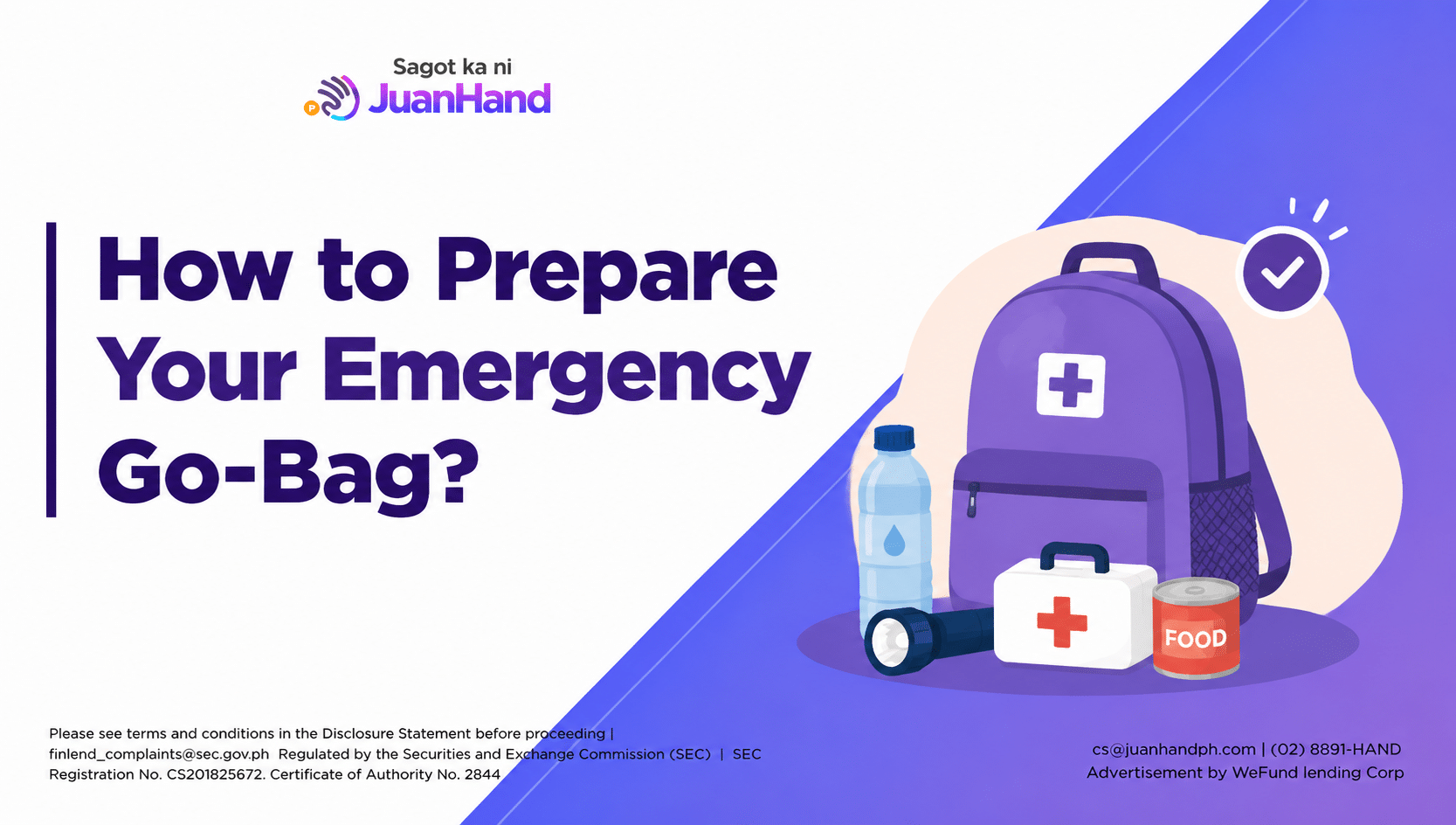
How to Prepare Your Emergency Go-Bag?
June 17, 2026It’s already the Habagat season according to the Philippine Atmospheric, Geophysical, and Astronomical Services Administration (PAGASA), and while many parts of the country continue to experience extreme heat due to the effects of El Niño, sudden heavy rains, strong winds, flooding, and other weather-related emergencies can still occur. The best way to protect yourself and your loved ones is to prepare before disaster strikes.
One of the most important preparedness measures is having an Emergency Go-Bag. A go-bag is a portable emergency kit containing essential items that can help you survive and stay comfortable for at least 72 hours during an evacuation or emergency situation. Whether you’re facing a typhoon, flood, earthquake, or other disaster, having a ready-to-grab bag can save valuable time and reduce stress.
Here are some essential tips on how to prepare your own Emergency Go-Bag:
1. Pick the Right Bag
Choose a bag that is durable, lightweight, and water-resistant or waterproof. The main purpose of a go-bag is to protect the contents inside from damage caused by rain, floodwater, or rough handling during emergencies.
A backpack is usually the best option because it is easy to carry and allows you to keep both hands free. Make sure the bag is spacious enough to hold all your emergency supplies while remaining comfortable to carry. Utilize every compartment efficiently and keep frequently used items within easy reach.
2. Prepare Enough Drinking Water
Water is one of the most important items during an emergency. Pack bottled water or reusable water containers that can provide enough drinking water for at least three days.
If possible, include water purification tablets or a portable water filter for added preparedness.
3. Pack Ready-to-Eat Food
During emergencies, access to electricity, clean water, and cooking facilities may be limited or completely unavailable. That’s why it’s important to pack food that can be consumed immediately or requires minimal preparation. Choose items that are nutritious, lightweight, and have a long shelf life.
Consider the dietary needs of your family members, especially children, seniors, and individuals with medical conditions. Make it a habit to check expiration dates every few months and replace items as necessary to ensure your emergency food supply remains safe and fresh.
4. Include Extra Clothing
Clean and dry clothing can help maintain comfort, hygiene, and health during emergencies. Flooding, heavy rains, and prolonged stays in evacuation centers can leave clothes wet and uncomfortable, increasing the risk of skin irritation and illness. Choose clothing that is easy to fold, quick to dry, and suitable for the local climate. Packing clothes in resealable plastic bags can help keep them dry even if your go-bag gets exposed to water.
5. Bring a First Aid Kit
A first aid kit can help you respond quickly to minor injuries and health concerns while waiting for professional medical assistance. During emergencies, access to healthcare facilities may be delayed due to flooding, road closures, or power outages. If a family member has specific medical conditions such as asthma, diabetes, or hypertension, make sure to include the necessary medications and supplies. Regularly inspect your first aid kit and replace expired items.
6. Keep Important Documents Safe
Important documents are often difficult, expensive, and time-consuming to replace when lost or damaged. Floods and other disasters can quickly destroy paper records, making document protection a critical part of emergency preparedness.
Store photocopies of important documents in waterproof envelopes or resealable plastic bags. In addition to physical copies, consider saving digital copies in secure cloud storage or on a password-protected USB drive. Having these documents readily available can simplify applications for assistance, insurance claims, and other recovery processes after a disaster.
7. Pack Hygiene and Sanitation Supplies
Maintaining personal hygiene becomes even more important during emergencies, especially when staying in evacuation centers or crowded temporary shelters. Proper sanitation helps reduce the spread of illnesses and promotes overall well-being.
Whenever possible, choose travel-sized items to save space. Keeping yourself and your family clean can help prevent common health issues such as diarrhea, respiratory infections, and skin conditions during emergencies.
8. Prepare Emergency Tools
Emergency tools can provide valuable assistance when basic services are disrupted. They can help you stay informed, navigate safely, and respond to unexpected situations.
A whistle is particularly useful because it allows you to signal for help without exhausting your voice. A radio can also provide critical weather updates and emergency announcements when mobile networks and internet services are unavailable.
9. Bring a Fully Charged Power Bank
Mobile phones serve as essential communication tools during emergencies. They allow you to contact family members, receive weather updates, access emergency information, and request assistance when necessary.
A reliable power bank can help keep your devices operational during prolonged power outages. To conserve battery life during emergencies, reduce screen brightness, limit unnecessary app usage, and switch to power-saving mode whenever possible.
10. Set Aside Emergency Cash
While digital wallets and online banking have become increasingly common, they may not always be available during disasters. Power interruptions, internet outages, and damaged infrastructure can disrupt electronic payment systems and ATM operations.
Store cash in a waterproof container and keep a mix of small denominations such as ₱20, ₱50, ₱100, and ₱200 bills. Smaller bills are often easier to use when businesses have limited change available during emergencies.
11. Include Special Needs Items
Every household has unique needs, so it is important to include special items in your emergency go-bag. Be sure to pack essential supplies for infants, seniors, individuals with medical conditions, and pets to ensure that every member of the household remains safe, comfortable, and well-cared for during emergencies.
12. Store Your Go-Bag in an Accessible Location
A well-prepared go-bag is only useful if you can access it quickly. Keep it near an exit or in a location known to all family members. Review and update the contents every six months to ensure supplies remain complete and in good condition. Emergencies can happen anytime, but preparation helps you stay ready and protected. A well-prepared go-bag gives you confidence when facing unexpected situations.
When emergencies also bring financial pressure, support can help bridge the gap. With JuanHand, you can borrow up to ₱50,000 with a daily interest as low as 0.025% and flexible repayment terms of up to 9 months. Application only requires a mobile number and one valid ID, with approval possible in as fast as 5 minutes.
JuanHand is trusted by more than 6 million Filipinos and is compliant with the Securities and Exchange Commission (SEC) and the National Privacy Commission (NPC), helping ensure your data and privacy remain safe and secure. When you need extra financial support during emergencies, JuanHand is ready to help.


